The simple analogy — why agentic AI is like a new type of employee, not a tool
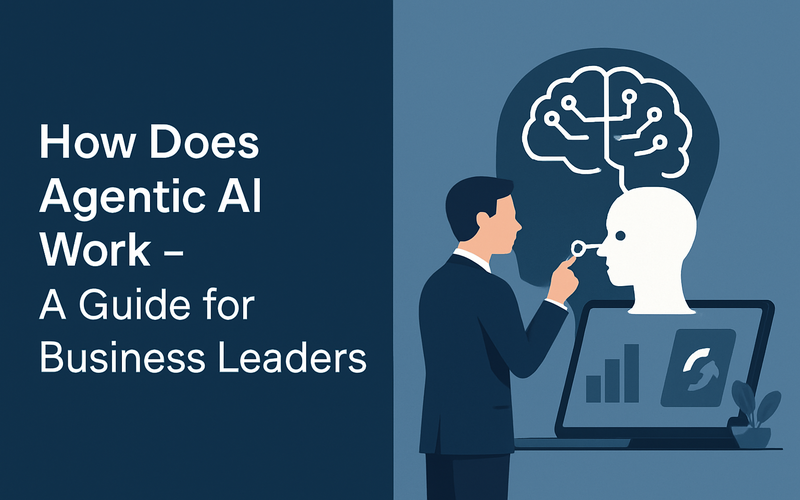
People often picture AI as just another tool—like a calculator or search engine, something you use to get results. Agentic AI changes that view. Think of it as hiring a new team member who understands your goals, plans tasks, and works independently. You set the target, and they figure out the rest.
Agentic AI is built to work like that. It's more than a responsive tool; it sets its own objectives, strategizes how to meet them, and follows through. This is why agentic AI feels different in business settings—it can handle workflows, interact with other systems, and adapt to new information as it becomes available.
Picture it as your autonomous colleague focused on specific business aims. Understanding how does agentic AI work in real-life scenarios is key.
The four core components — perception, reasoning, planning, and action
To grasp how agentic AI works, break it down into four crucial parts. These components form the AI agent framework that enables the system's autonomous function.
1. Perception
The AI agent collects data from its surroundings. This might include information from APIs, inputs from web browsers, sensor data, or any pertinent source. It's vital for the AI to keep perceiving changes to make smart decisions.
2. Reasoning
After gathering information, agentic AI processes the data. It reviews constraints, analyzes options, and doesn't just follow orders blindly. Instead, it weighs possible choices like a person evaluating scenarios.
3. Planning
With a clear picture of the situation, the agentic AI drafts a plan. It outlines steps to achieve goals and adjusts if circumstances shift. If new data changes a previous action, the AI modifies its plan accordingly.
4. Action
Finally, the AI takes action. It uses available tools—such as APIs, databases, web browsing, or code execution—to complete tasks. This step translates the plan from thought to action.
These four components operate in a continuous cycle. Perception guides reasoning, which updates planning, and prompts fresh actions. This process allows agentic AI to autonomously handle complex procedures.
How an agentic AI receives a goal and breaks it into steps
Core to how does agentic AI work is its ability to turn a broad objective into actionable steps. When assigned a goal, the AI first examines what the objective entails and the expected outcome.
For instance, if the goal is “Increase sales by 10% this quarter,” the agentic AI will:
- Dissect the goal into smaller objectives like lead generation, customer outreach, and follow-ups.
- Rank these objectives based on effectiveness and feasibility.
- Plan actions such as sending emails, organizing calls, and monitoring responses.
This breakdown happens via reasoning and planning elements that ensure the AI remains structured and directed, rather than haphazard.
Different AI agent frameworks vary in complexity, but they generally use hierarchical task planning or reinforcement learning to enhance their future performance.
How it uses tools — APIs, databases, browsers, code execution
Agentic AI systems aren't isolated. They interact with various external tools to complete tasks.
API Integration
The AI interacts with APIs to retrieve data or prompt actions in other programs. For instance, it might use a CRM API to add contacts or update sales statuses.
Database Access
It queries databases to access or store information, allowing the agent to keep context and learn from past events.
Web Browsing
Some agentic AI can navigate websites to collect real-time information, useful for market analysis or competitor research.
Code Execution
Advanced agents can execute code snippets for calculations, data processing, or internal task automation, offering more flexibility beyond external interactions.
By combining these tools, autonomous AI systems can navigate intricate workflows with minimal human intervention at every stage.
The role of memory — short-term context vs long-term knowledge
Memory is a cornerstone of how agentic AI works. It allows the agent to track past actions and acquire knowledge over time.
Short-term memory
This stores current information for ongoing tasks. It helps the AI keep context, like tracking types of calls made and responses received during scheduling.
Long-term memory
This contains facts, learned strategies, and other knowledge the AI gathers across various tasks and sessions. Long-term memory might include information like customer preferences or marketing outcomes.
Effective agentic AI differentiates between these memories, using short-term memory for task execution and long-term memory for continuous improvement. This memory setup supports more customized and efficient functioning.
Human-in-the-loop — where humans stay involved and why
Despite its autonomy, agentic AI still relies on human input. Humans offer oversight, set parameters, and intervene in unexpected scenarios.
Human-in-the-loop involvement involves people monitoring AI decisions, confirming outputs, and handling delicate tasks. For example:
- Approving final customer communications to ensure accuracy and tone.
- Revising AI goals to match business priorities.
- Stepping in when the AI faces ambiguous or risky challenges.
This partnership builds trust and mitigates risks, ensuring agentic AI aligns with company values and legal standards.
A real business walkthrough — what happens when you deploy an AI agent for a sales task
Let's delve into a real-world scenario to illustrate how agentic AI functions in a business context, using iTechNotion’s recent deployment of an autonomous sales agent.
The AI's mission was to boost lead conversion by handling outreach and follow-up tasks. Here's how the agent performed:
- Goal reception: The AI received a target to increase qualified sales leads by 15% over three months.
- Planning: It divided this goal into specific actions: identify leads, send emails, schedule calls, and track feedback.
- Tool usage: The agent utilized the CRM via APIs, dispatched personalized emails through a marketing platform, and booked meetings using a calendar API.
- Memory and adaptation: It relied on short-term memory to track ongoing interactions and long-term data to refine its strategies.
- Human oversight: Sales managers reviewed communications weekly, offering feedback to enhance the agent’s performance.
This example showcases the agentic AI’s ability to manage complex tasks while trusting humans for final decisions. According to iTechNotion, their system increased qualified lead conversion by 12% within two months, making a substantial business impact.
What agentic AI cannot do yet — honest limitations
Although powerful, agentic AI has its limits.
- Lack of deep understanding: It doesn’t fully comprehend context like a human and may misinterpret subtle or ambiguous objectives.
- Dependence on data quality: Poor or incomplete data can result in faulty decisions.
- Ethical judgment gaps: The AI struggles with ethics or company culture, requiring strict boundaries.
- Complex strategy: Long-term strategic planning poses challenges; humans still set the vision.
- Error handling: Unforeseen issues may confuse the AI, necessitating human intervention.
Being transparent about these limitations is vital for businesses considering agentic AI. It should be seen as a strong assistant, not a substitute for human judgment.
Industry research from Gartner and McKinsey supports this approach, advocating human-AI collaboration as the best practice.
Conclusion
Getting a handle on how does agentic AI work is crucial if you’re a business owner or a non-tech founder exploring AI for the first time. Agentic AI acts like a savvy employee—observing, reasoning, planning, and acting with autonomy. It dissects goals into steps, uses various tools, and taps into memory for efficient task execution.
While agentic AI is potent, human oversight is needed, and it has its limitations, particularly concerning complex judgment and ethics. Combining AI with human input yields the best results.
If you're ready to explore how agentic AI can aid your business, consider collaborating with expert partners like iTechNotion, who specialize in creating AI agents tailored to address real business challenges. Begin by defining clear goals and slowly integrating AI agents into your processes.
Agentic AI is an intriguing tech with feasible applications for determined business leaders looking to boost efficiency without diving into tech complexities. Keep on learning, stay realistic about its current capabilities, and witness how it evolves into an indispensable team player.
Call to Action: Connect with AI specialists to discuss your business objectives and explore how agentic AI can assist in achieving them. An informed approach will provide the most value and prepare you for the era of autonomous AI systems.