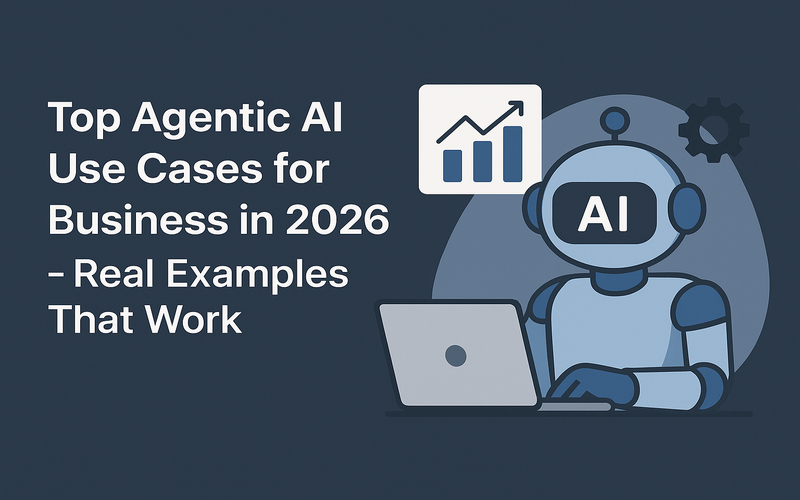
Why 2026 is the Year Agentic AI Moves from Pilot to Production
Agentic AI is stepping out from the shadows. For years, businesses kind of poked at it like a strange new tech, unsure of where it fit. But come 2026, it breaks out. AI models got smart enough to handle tricky jobs without bugging humans every step. Data's getting better and more available, so AI can learn its stuff. Plus, it’s easier to plug AI into different business gears thanks to new tools.
Companies have stopped just playing around with this stuff. AI agents are rolling out big time with real money in their pockets. Gartner's 2026 CIO survey says more than half of the businesses are using AI agents for at least one major task, boosting their efficiency by 20% to 40%. It's catching on big time in retail, finance, healthcare, and manufacturing.
But hey, AI isn’t waving a magic wand here. It’s got its limits—dealing with nuance or making judgment calls isn't its strongest suit yet. You’ve got to make sure your AI matches the business goals you’re shooting for, and frankly, there still needs to be a human in the mix.
Use Case 1 — Automated Sales Research and Outreach Qualification
Sales teams lose too much time with busywork like research and vetting potential customers, which makes it a perfect target for AI. Sales AI agents scour company stats, snoop around social media, and catch market waves to find hot leads fast. Then they shoot off personalized notes, gauge the response, and line up the good stuff for the human reps.
Take this one medium-sized SaaS company. They got iTechNotion to whip up an AI that shaved 60% off the time they used to spend on leads and reach-outs. The AI combed through databases and news to whip up outreach lists, with the flashy part being interactive chat sequences that sorted the wheat from the chaff.
Remember to tweak the AI so it respects privacy standards and sticks to the brand voice. And don't forget to let humans give feedback to keep fine-tuning things.
Use Case 2 — Intelligent Customer Support with Full Resolution Capability
Customer support’s been all about tiered systems, tossing queries from one human to another. But AI's changing the game, handling common problems from start to finish, which translates to less waiting and happier customers.
AI's using natural language understanding to get customer questions—however they come, like chat or email—and delivers answers, sorts returns, processes refunds, or books services without handing off to a human unless it really hits a snag.
In one retail gig, iTechNotion had an AI support agent getting 70% of queries done without a human stepping in. It synced up with inventory and delivery trackers for real-time responses. And most importantly, it made sure customers knew what was going on, which built trust.
AI use in customer support shows how AI agents aren’t just helpers; they’re problem-solvers. But for those tricky empathy-needed or negotiation-heavy cases, bring in the humans. Mixing human and AI workflows is the sweet spot.
Use Case 3 — Finance Operations — Invoice Processing, Reconciliation, Reporting
Finance teams are drowning in documents and data that require matching across systems. Agentic AI takes care of invoice data extraction, matches payments, and even whips up compliance reports. Unlike stiff RPA tools, this AI blends document comprehension with flexible decision-making.
Saving the day for a bank, AI shrank their monthly invoice reconciliation time from 40 down to under 6 hours. Trained on messy PDFs, emails, and spreadsheets, the AI agent called out anomalies and sent exceptions over to the accountants on time. It even generated reports that passed audit muster with flying colors.
Be smart about linking up with old finance systems and checking the data’s clean. Keeping tabs on agent accuracy and refreshing models for new formats or rule shifts is crucial.
Use Case 4 — HR Automation — Screening, Scheduling, Onboarding Workflows
Human resources are finally getting a break. AI agents whip through repetitive tasks without sacrificing the candidate vibe. Agentic AI screens resumes, ranks the talent according to the job specs, secures interviews in a snap, and does the paperwork dance for onboarding.
iTechNotion hooked a healthcare provider up with an AI agent that slashed the time-to-hire by a third. The agent parsed resumes with NLP magic, matching skills with job needs and handled candidate chats like a pro, keeping everyone in the loop and collecting required docs.
This frees up HR for the real work, and makes sure candidates aren't lost in the shuffle. Just mind the bias in screening algorithms and keep candidates informed for fairness’ sake.
Use Case 5 — IT Operations — Monitoring, Alerting, and Self-Healing Systems
IT folks can exhale a little, thanks to AI keeping a watchful eye on infrastructure health, calling out weird stuff, and fixing what needs fixing on its own. AI agents shuffle through logs and signals to predict breakdowns and carry out fixes—think restarting servers, slapping on patches, or rerouting traffic without needing a human push.
A cloud service firm cut system downtime by a quarter using an AI agent. The agent’s brains got sharper detecting issues and zeroed in on solutions as time went on.
This showcases the magic when AI meets DevOps. Keep a close watch on the AI to ensure it’s playing nice with security and compliance rules. Maintain an override option just in case and make sure there's a clear record of what it’s up to.
Use Case 6 — Legal and Compliance Document Review and Flagging
Legal teams are buried in piles of contracts, policies, and rules to comb through. Agentic AI pitches in by scanning, interpreting, and tagging documents for potential quagmires like weird clauses or compliance slip-ups, making reviews smoother and quicker.
In a financial firm, iTechNotion set up an AI agent to review endless client contracts monthly. This AI knew how to highlight high-risk cases and sped up the manual review process by heaps.
Legal AI can be quite the powerhouse but needs a soft touch and expert validation to avoid glossing over the quiet risks. It doesn’t replace the sharp-eyed attorneys but makes their jobs lighter.
Use Case 7 — E-commerce — Inventory Management and Dynamic Pricing
E-commerce folks use agentic AI to auto-manage inventory by seeing demand ahead, restocking smartly, and tweaking prices to boost profits and sales speed.
One online shop saw a 15% jump in sales after bringing in an AI that kept tabs on customer preferences, seasonal swings, and the competition’s prices real-time. The agent adapted prices several times daily and got a handle on supply chain needs ahead of time.
Of course, there are risks like pricing goofs or customer trust erosion if prices start dancing around too much. Ground rules and clear policies help thread this needle.
How to Identify Which Use Case Fits Your Business First
Picking the right agentic AI use case is about nailing down your business goals, spotting current hiccups, and getting AI-ready. Start by pinpointing tasks that chew up time and could use a quick AI fix.
- Look at task complexity: Agentic AI shines in structured, multi-step processes where decisions have to be made.
- Check data quality: Clean, relevant data is your golden ticket for training and keeping accuracy on point.
- Focus on impact and ROI: Prioritize where AI can make a clear bang or improve how customers feel about things.
- Add human oversight: For tasks that need deep judgment or have compliance concerns, sprinkle in those human checks.
Partner up with savvy AI folks like iTechNotion who can scope things out and suggest where to start for real business impact.
iTechNotion's Approach to Agentic AI Implementation by Use Case
iTechNotion is big on making things work. They dig deep to get what clients need, then sketch out agentic AI use cases that really fit the bill.
Their teams roll out flexible AI agents that slot into the existing system mix, aiming for smooth deployment and handling. And once it's live, they don’t just leave it—they keep an eye on it, making updates and tweaks as needed.
Transparency and ethical AI practices are core to what they do—setting clear boundaries on what the AI can do, knowing when to pass the baton back to humans, and explaining how these AI buddies function keeps trust high.
Like when a logistics firm saw a 40% drop in call volumes and hit higher on-time delivery rates after iTechNotion deployed an AI agent for customer support and tracking. That kind of story highlights how intentional AI applications make big waves in business.
Bottom Line: 2026 is shaping up to be a massive year for agentic AI in business. Get to know these use cases and work with experienced partners to harness AI agents that refresh operations, trim costs, and boost customer satisfaction—all while smartly managing the risks involved.
Ready to dive in? Look at what your business does day-to-day to spot where agentic AI could step up. Reach out to iTechNotion to chat about how they can help you move from just testing the waters to making a real splash.