The simple version — what generative AI is actually doing when it responds
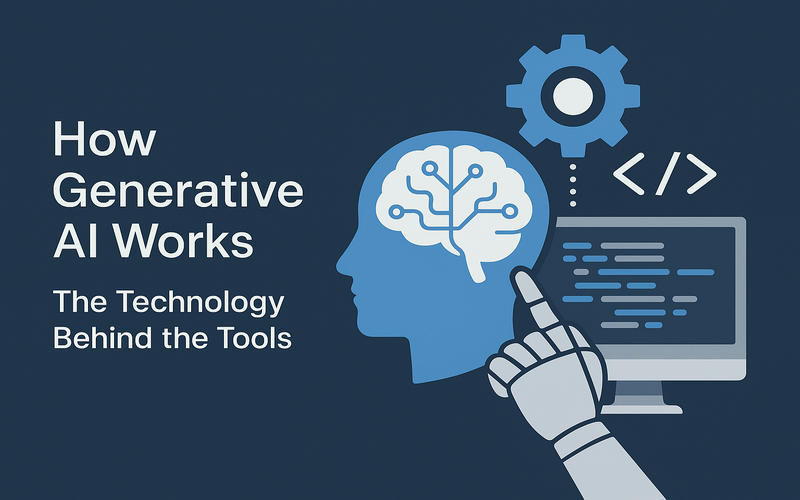
Generative AI isn’t just about crunching existing data—it actually creates new stuff! You type in a question or prompt, and the AI, pulling from its vast stash of learned patterns, spits out something—be it text, an image, or code. It's like a seasoned storyteller drawing from past tales.
Take a chatbot handling customer service, for instance. Instead of dishing out canned responses, it predicts and crafts customized replies right there. That’s why responses feel personalized, not like a stuck-on-repeat answering machine.
iTechNotion, a company easing businesses into AI, helped an online retailer intro a generative AI chatbot. This bot tackles typical queries, freeing up the human agents for trickier problems. It’s how generative AI moves from sci-fi fascination to real-world utility.
Foundation models — what they are and how they are trained
Foundation models are like the bedrock of generative AI systems. They’re large, complex systems trained on a mixed bag of data—text, pictures, or even code sourced from the web and other pools. The idea? To gather a general grasp of languages and concepts by noticing trends in this data avalanche.
These models don’t train for one specific job. Instead, they learn broadly, enabling uses from writing essays to translating languages or engaging in Q&A sessions.
Teaching a foundation model involves feeding it billions of data points and tweaking its internal workings to lower prediction mistakes. This demands tons of computational muscle, typically the terrain of big-resource firms.
Picture a foundation model as an immense knowledge library. It’s ready to be fine-tuned for specific tasks, much like how iTechNotion adjusted a model to assist a startup in crafting personalized email campaigns.
How language models predict and generate text
Language models play by guessing the next word in line based on what preceded it. See the phrase "The cat sat on the"? The model might guess "mat" or "cushion" as the next word by weighing possibilities and choosing what fits best, then rinse and repeat for subsequent words.
This happens at lightning speed and on a large scale, allowing the AI to churn out complete paragraphs, stories, or conversational replies that sound lively and logical.
Big language models (LLMs) bring in fancy setups like transformers to keep an eye on lots of words all at once, not just one by one. This ability helps them grasp context like pros and churn out more fitting responses.
The role of parameters — what model size actually means
Parameters are choices within AI models that aid in foreseeing what's next. They act like setting dials on past learning. The number of these parameters usually hints at the model's size and muscle. For example, GPT-3 packs 175 billion parameters, thus capable of teasing out intricate patterns and crafting crisp text.
More parameters hint at sharper insight but they require more oomph for training and action. Smaller models are efficient and budget-friendly but might skip a beat on nuance or precision.
The sweet spot for parameter size revolves around business goals. iTechNotion encourages startups to balance model heft with costs and execution needs.
Fine-tuning and RAG — how AI is customized for specific business needs
Fine-tuning involves customizing a foundation model for a specific domain or goal using tailored data. This allows businesses to align AI output with their tone, industry lexicon, or particular uses.
There’s also Retrieval-Augmented Generation (RAG). Here, instead of leaning entirely on the model’s know-how, RAG systems incorporate external databases or documents during their generative magic. This tweak boosts precision and applicability, especially in areas bustling with fresh or confidential knowledge.
Take iTechNotion, which set up a RAG solution for a legal firm. This AI snags pertinent legal precedents from a database and teams up with chat AI to draft detailed legal briefs, heightening lawyer productivity.
Tokens, context windows, and why they matter for business applications
Generative AI doesn't handle text like us humans do. It breaks down phrases into smaller bits called tokens. For instance, "running" could become "run" and "ning." These models interpret and make text bit by bit.
A context window is how many tokens the model considers at once. If input surpasses this limit, some parts drop off. The window's size determines how much the AI can consider for crafting coherent, context-savvy replies.
Understanding tokens and context windows is crucial for business functions. Lengthy contracts or multifaceted customer chats might need models with extensive context windows to retain vital data.
Multimodal AI — when models handle text, images, audio, and code together
While traditional AI models stick to a single data type, multimodal AI blends abilities, allowing models to manage and generate with multiple formats at once.
Now, a single tool can interpret an image and whip up a caption or craft code based on spoken prompts. For businesses, this opens doors to exciting uses like assistant tools that grasp documents, voice notes, and visuals all at once.
iTechNotion helped an e-commerce business create a multimodal AI tool that crafts product descriptions using images and customer feedback, streamlining content processes.
The difference between cloud AI APIs and self-hosted models
Businesses can sip from the AI fountain in two ways: via ready-made cloud AI APIs from major entities or by hosting models themselves.
Cloud AI APIs present ready-to-use services that smoothly expand and receive updates often. They need minimal tech rigging but could have concerns over data privacy or costs due to usage.
Self-hosted models confer full control over AI tools and datasets but necessitate infrastructure, expertise, and upkeep. This suits firms with tough compliance rules or major customization needs.
What this means practically for a business building on generative AI
Understanding generative AI helps business owners make smart choices about implementing it. This tech can simplify tasks, tailor customer experiences, and boost creativity.
Yet, remember AI isn't flawless. Churned outputs need a human scan for goofs or bias. Infrastructure and funding warrant decent oversight too.
Partnering with folks like iTechNotion aids firms in maneuvering these waters. They help select apt models, hone them as needed, and gel AI into existing workflows securely.
Ultimately, with a clear eye on AI tech, it's shown as a potent innovation tool, albeit one paired best with human judgment and expertise.
Conclusion
Generative AI cleverly marries complex models guessing content through training data with the use of ideas like fine-tuning and fresh modes like multimodal AI. Despite its techie wrapping, the core idea is direct: AI learns from data cycles and applies this to create cool, functional stuff.
For non-techie founders and business heads, riding the generative AI wave means mastering its essentials, recognizing perks, and understanding limits, all while rallying with capable partners for effective integration.
Interested in how generative AI can push your business ahead? Chat with iTechNotion specialists to kickstart your AI venture with tailored guidance and doable solutions suited for your goals.