The automation opportunity — what most businesses are leaving on the table
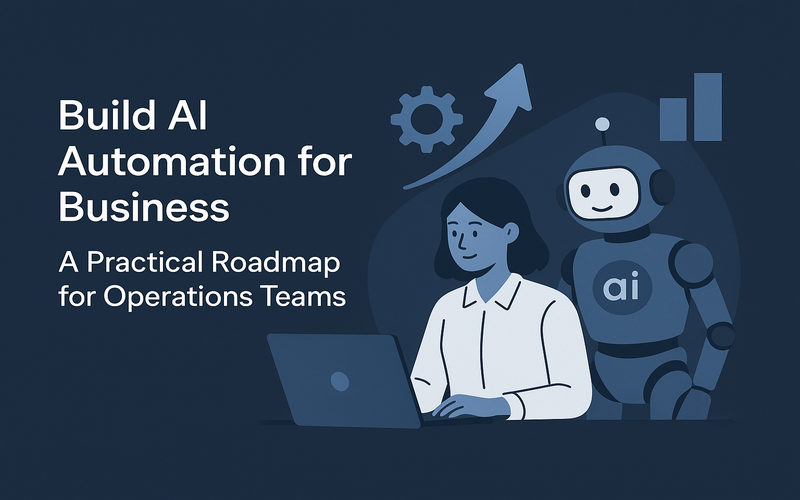
Many businesses still haven't tapped into the full potential of AI automation, even with its benefits clear as day. Big chance here is connecting AI to those monotonous tasks that suck up time and carry errors, freeing up space for what truly matters. Think of a mid-sized logistics firm drowning in manual updates. Automating these could slice hours off their daily grind and amp up customer satisfaction.
Research backs this up, like McKinsey's take in 2024: AI-driven automation can slash operational costs up to 30% while bumping productivity and accuracy. Still, many hesitate, tangled up in fuzzy strategies or tight resources.
Starting with an audit — identifying your highest-value automation opportunities
To hit the ground running, kick off with a deep-dive audit of your workflows. Product managers and operations gurus should map out tasks, spotlighting those ripe for automation. Look at high-volume, repetitive tasks where mistakes are a costly bummer.
Steps for effective audit
- Document workflows: Lay out what goes in, what comes out, and who's doing what by hand.
- Gather quantitative data: Track time, spotlight errors, and figure out the cost.
- Consult front-line staff: Listen in, they know the pinch points.
- Identify automation fit: Ideal tasks? Those with clear rules and structured data perfect for AI.
Like how iTechNotion jumped in for a retail client, spotting creaky manual entries ripe for AI help, cleaning up those errors, total timesaver.
Prioritisation framework — effort vs impact vs risk matrix for automation projects
Not all automation brings the same spark. A smart approach is using a matrix to lay out effort, impact, and risk, cherry-picking the best projects.
Understanding the matrix axes
- Effort: Size of the investment, time you'll sink into it.
- Impact: What you'll gain (e.g., time saved, costs dodged).
- Risk: Roadblocks, privacy blunders, workflow disruptions—stuff to watch out for.
Projects with high impact but low effort and risk? Jump on those first. Tackle others as resources allow or put them on ice if they don't make the cut.
Building vs buying — when to use existing tools vs custom development
When deciding whether to build your own or scoop up something ready-made, weigh up your resources, timeline, and how specific your needs are.
When to buy
- For tasks like chatbots or invoice processing.
- If AI expertise or budget is tight.
- Need something fast and supported.
When to build
- Unique, complex processes that off-the-shelf can’t hack.
- When unique workflows are your ace.
- The long game pays off post-investment.
Take iTechNotion: They built a fraud detection tool for a finance client when existing options fell short but nudged another client towards existing platforms for simpler tasks.
The 90-day automation roadmap — what to build in what order
For focus and clarity, draw up a 90-day plan balancing quick wins and solid groundwork.
Typical 90-day roadmap phases
- Month 1: Audit & prioritisation — Scope out processes; pick high-yield, low-risk ones.
- Month 2: Prototype development — Crack on with building or configuring AI workflows.
- Month 3: Deployment & feedback — Launch, observe, tweak based on feedback.
Use this step-by-step to tweak before scaling. iTechNotion shows clients measurable wins within 90 days.
Measuring ROI — time saved, error reduction, cost per automated process
Track the value automation delivers—make sure it pays its way with the right metrics.
Key ROI metrics
- Time Saved: How much time you clawed back by replacing manual labor.
- Error Reduction: How much you cut mistakes or compliance niggles.
- Cost per automated process: Total setup cost divvied by the processes automated.
Like iTechNotion's insurance client cutting processing time by 40% and errors by 25%—crucial metrics for expansion.
Scaling from one workflow to company-wide automation
Once you've nailed a few, broaden that success across the business, scaling up wisely.
Scaling considerations
- Standardize processes: Build uniformity for efficiency's sake.
- Expand infrastructure: Beef up AI and integration platforms.
- Develop governance: Define rules for data, privacy, and ongoing maintenance.
- Build internal capability: Train teams to independently handle and improve automation.
Continuously evaluate and update to keep systems effective. Build stakeholder trust with transparency.
How iTechNotion helps operations teams build their automation roadmap
iTechNotion specializes in carving AI strategies that make a mark. They guide teams through mapping, prioritizing with an insightful framework.
They partner with you to walk through the buy vs build puzzle and craft 90-day roadmaps tuned for quick wins and sustainable growth.
With examples like cutting customer service response times for a retail giant by half in just three months, they set a gradual and strong groundwork for company-wide magic.
With teams getting tailored support, tackling goals, the automation journey becomes much, much clearer.
Conclusion
Infuse AI into your operations; this isn't just about streamlining—it's about truly transforming. Start with a thorough audit, smartly prioritize projects, and weigh build versus buy decisions carefully for your needs.
Use structured plans like a 90-day roadmap to get going, understand your ROI thoroughly, and prepare to scale widely within the business. Stick to transparency for stakeholder faith.
With experts like iTechNotion by your side, operations initiatives find grounding and strategy that nails goals.
Ready to dig into automation gains in your operations? Get on board with iTechNotion—they’ll help you map out an AI automation plan that really walks the talk.