Why the AI vendor selection process is different from traditional software procurement
Choosing an AI development company isn't like shopping for basic software. Traditional software usually follows a clear set path with defined features and timelines. But AI is a whole different world with its need for skilled data scientists, machine learning experts, and industry-specific insights.
AI solutions hinge on data quality, constant model updates, and learning. It means the teams you work with aren't just dropping off a piece of software but partnering with you throughout the whole AI journey. Plus, AI tends to ramp up data privacy and security needs because of how much data it crunches through.
For instance, there's a cool project we did with a retail company that needed AI to predict demand. Totally different from your typical software deal—the vendor's chops in dealing with big datasets and adapting models to seasonal swings made all the difference. That level of complexity and customization is what sets AI apart.
The evaluation framework — 6 dimensions that matter most
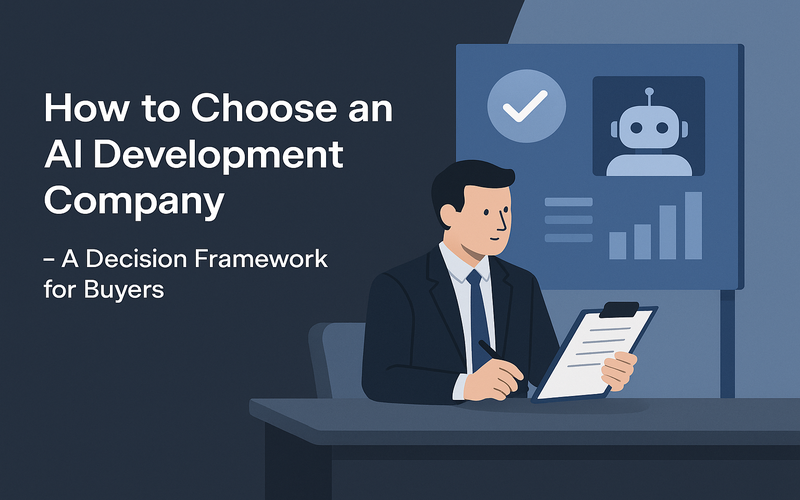
When you're hunting for an AI development partner, look beyond just the basics like price tags. Check out these six important areas to truly figure out if they're the right fit:
- Technical depth: Can they build, or are they more into integration?
- Production experience: Real-world deployments, not just flashy demos
- Domain knowledge: Do they speak your industry's language?
- Data and security practices: How do they handle and protect your data?
- Post-delivery support: Do they stick around to maintain and fine-tune models?
- Team transparency: Who's actually working on your project?
Scoping out these areas thoroughly ups your chances of finding a partner who truly delivers value, cuts risks, and keeps innovation on track.
Dimension 1 — Technical depth: do they build or just integrate?
Technical depth shows a vendor's ability to craft AI models from scratch versus piecing together existing solutions. Building demands experts in algorithms, ML frameworks, data engineering, and the cloud.
Sure, some places stick to using pre-built AI APIs. Quick for some tasks, but serious limits on customization and growing in the future. Creating from the ground up means models that fit your unique needs and data.
At iTechNotion, we build custom recommendation engines and NLP setups rather than just tweaking off-the-shelf stuff. Makes all the difference in solving unique problems and maximizing returns.
Dimension 2 — Production experience: demos vs live deployments
Anyone can pull off shiny AI demos. The real test? Having live deployments with a clear impact.
Ask to see detailed case studies with solid metrics and ROI. If they integrate AI smoothly into systems, that's gold. Real production experience shows they can tackle practical hurdles like data shifts and user adoption.
Like our gig with a healthcare provider—deploying models that update risk assessments with fresh records. Real-world stuff and our strength in evolving AI solutions beyond the drawing board.
Dimension 3 — Domain knowledge: do they understand your industry?
AI projects shine when vendors get your industry's quirks like rules, usual data formats, and performance indicators.
Take finance, for example—AI solutions need to obey tight regulations, just like healthcare does with privacy laws. Vendors in the know can craft solutions that stay compliant yet accurate.
We’ve got rich experience in retail, healthcare, and finance at iTechNotion, helping us nip domain-specific hiccups in the bud and craft tailor-fitted AI models.
Dimension 4 — Data and security practices: how is your data handled?
Your data is the crown jewel in AI projects. Vendors need bulletproof data protection chops to keep everything in check.
Expect secure data channels and strong governance frameworks. Hit them up for certifications or third-party audit results to show they're on top of things.
We push for clients to get clear data handling processes upfront. At iTechNotion, we're all about tight access controls, encrypted storage, and vigilant monitoring as the norm to keep risks low.
Dimension 5 — Post-delivery support: what happens after go-live?
AI models change over time. Shifting data and business changes mean your vendor should offer continuous support for retraining models and quick problem-solving.
Without post-launch care, models drift and mess up predictions, losing you money or causing bad decisions.
We provide managed AI services and dashboards that ping clients about accuracy drops and offer automated retraining. This ensures our models grow with new data.
Dimension 6 — Team transparency: who actually works on your project?
Get vendors to reveal their team—data scientists, ML engineers, project managers. Transparency means you can gauge expertise and available resources.
Watch out for firms outsourcing to unknown parties or not introducing key players. That opacity risks quality and delays.
We make sure clients meet our AI stars from day one at iTechNotion. Builds trust and enables direct conversations throughout the project.
Red flags that signal the wrong choice
Keep an eye out for these warning signs:
- Vendor has no proof of live AI work—only demos.
- They promise big results but duck details on limits or data issues.
- No clear data security or compliance steps.
- Team details are hazy or missing key roles.
- No post-delivery support or they dodge SLAs on model updates.
- Pricing relies only on licenses instead of actual delivered value.
Ignoring these often leads to expensive missteps or AI models that don't cut it.
How to structure a structured evaluation process — RFP to final decision
Start by pinning down your business goals and AI needs. Then, whip up a solid Request for Proposal (RFP) that covers tech requirements, data limits, and evaluation angles matching those six dimensions.
Narrow down vendors based on what they bring to the table. Dive into technical interviews and ask for proof of concept or pilots with clear results.
Evaluate vendors on each point using a weighted framework reflecting your needs. Gather key decision-makers to hash out risks and possibilities.
This approach cuts down bias, ups clarity, and makes choosing a vendor feel more certain.
Where iTechNotion fits in this framework
At iTechNotion, we align seamlessly with this evaluation method, showcasing our technical depth, hands-on production experience, industry expertise, strong data security practices, and transparent team setups.
With proven results in building scalable AI solutions, we focus on ROI and provide all-around project support, reducing risks and ensuring adaptability. Our straightforward and open approach ensures clients are up-to-date on every step of their AI journey.
With iTechNotion, you get more than just a vendor—we’re your strategic partner for AI, ready to take on complexities and help drive solid outcomes.
Conclusion
Choosing the right AI development company takes more than just eyeing costs and surface offerings. These six evaluation areas give a clear framework for assessing and sizing up vendors effectively.
Remember, AI projects are a continuous journey, requiring partners who customize solutions, operate with full transparency, and provide solid post-launch support.
Use our suggested structured process to scout and pick your AI partner, minimizing risk and boosting ROI. iTechNotion is ready to join you on this adventure, offering proven skills and collaborative sincerity.
Ready to dig into your AI vendor options confidently? Reach out to iTechNotion and see how we match your needs while delivering real-world impact.